Buddhists stole my clarinet... and I'm still as mad as Hell about it! How did a small-town boy from the Midwest come to such an end? And what's he doing in Rhode Island by way of Chicago, Pittsburgh, and New York? Well, first of all, it's not the end YET! Come back regularly to find out. (Plant your "flag" at the bottom of the page, and leave a comment. Claim a piece of Rhode Island!) My final epitaph? "I've calmed down now."

Wednesday, January 20, 2010

A Wake Up Call

by Robert Kuuttner, Salon.com

How could the health care issue have turned from a reform that was going to make Barack Obama ten feet tall into a poison pill for Democratic senators? Whether or not Martha Coakley squeaks through in Massachusetts on Tuesday, the health bill has already done incalculable political damage and will likely do more. Polls show that the public now opposes it by margins averaging ten to fifteen points, and widening. It is hard to know which will be the worse political defeat -- losing the bill and looking weak, or passing it and leaving it as a piñata for Republicans to attack between now and November.

The measure is so unpopular that Republican State Senator Scott Brown has built his entire surge against Coakley around his promise to be the 41st senator to block the bill -- this in Ted Kennedy's Massachusetts. He must be pretty confident that the bill has become politically radioactive, and he's right.

It has already brought down Senator Byron Dorgan of North Dakota, a fighter for health care and other reforms far more progressive than President Obama's. Dorgan championed Americans' right to re-import cheaper prescription drugs from Canada, a popular provision that the White House blocked. Dorgan, who is one of the Senate's great populists, began the year more than twenty points ahead in the polls of his most likely challenger, North Dakota Governor John Hoeven. By the time he decided to call it a day, Dorgan was running more than twenty points behind. The difference was the health bill, which North Dakotans oppose by nearly two to one. The fact that Dorgan's own views were much better than the Administration's cut little ice. He was fatally associated with an unpopular bill.

So, how did Democrats get saddled with this bill? Begin with Rahm Emanuel. The White House chief of staff, who was once Bill Clinton's political director, drew three lessons from the defeat of Clinton-care. All three were wrong. First, get it done early (Clinton's task force had dithered.) Second, leave the details to Congress (Clinton had presented Congress with a fully-baked cake.) Third, don't get on the wrong side of the insurance and drug industries (The insurers' fictitious couple, Harry and Louise, had cleaned Clinton's clock.)

But as I wrote in Obama's Challenge, in August 2008, it would be a huge mistake to try to get health care done right out of the box. Obama first needed to get his sea-legs, and focus like a laser on economic recovery. If he got the economy back on track, he would then have earned the chops to undertake more difficult structural reforms like health care.

Deferring to the House and Senate was fine up to a point, but this was an issue where the president needed to lead as only presidents can -- in order to frame the debate and define the stakes.

Cutting a deal with the insurers and drug companies, who are not exactly candidates to win popularity contests, associated Obama with profoundly resented interest groups. This was exactly the wrong framing. This battle should have been the president and the people versus the interests. Instead more and more voters concluded that it was the president and the interests versus the people.

As policy, the interest-group strategy made it impossible to put on the table more fundamental and popular reforms, such as using Federal bargaining power to negotiate cheaper drug prices, or having a true public option like Medicare-for-all. Instead, a bill that served the drug and insurance industries was almost guaranteed to have unpopular core elements.

The politics got horribly muddled. By embracing a deal that required the government to come up with a trillion dollars of subsidy for the insurance industry, Obama was forced to pursue policies that were justifiably unpopular -- such as taxing premiums of people with decent insurance; or compelling people to buy policies that they often couldn't afford, or diverting money from Medicare. He managed to scare silly the single most satisfied clientele of our one island of efficient single-payer health insurance -- senior citizens -- and to alienate one of his most loyal constituencies, trade unionists.

The bill helped about two-thirds of America's uninsured, but did almost nothing for the 85 percent of Americans with insurance that is becoming more costly and unreliable by the day -- except frighten them into believing that what little they have is at increased risk of being taken away.

All of this made things easier for the right, and left people to take seriously even preposterous allegations such as the nonsense about death panels. It got so ass-backwards that the other day Ben Nelson, who successfully held out for anti-abortion language and a sweetheart deal for Nebraska's Medicaid as the price of his vote, found himself facing a wholesale voter backlash.

Nelson began running TV spots assuring Nebraska voters that the Obama health plan is "not run by the government." That's one hell of a slogan for a party that relies on democratically elected government to offset the insecurity, inequality and insanity generated by private commercial forces. If not-run-by-government is the Democrats' credo, why bother?

So we went from a politics in which government is necessary to provide secure health insurance -- because the private insurance industry skims off outrageous middlemen fees and discriminates against sick people -- to a politics in which Democrats, as a matter of survival, feel they have to apologize for government. Thank you, Rahm Emanuel.

The budget-obsessives around Obama also insisted that most of the bill not take effect until 2013, so that all of the scary stuff gets three years to fester before most people see any benefit. Call it political malpractice.

Finally, the health insurance battle sucked out all the oxygen. When Obama made time to work the phones personally, it wasn't to enact serious financial reform (this was left to the tender mercies of Tim Geithner) or to fight for a real jobs program (deficit hawks Peter Orszag and Larry Summers got to blunt that one). No -- Obama got on the phone and met with legislators to round up the last vote or two for a sketchy health reform that crowded out far more urgent issues.

As a resident of Massachusetts, in the last two days I've gotten robo calls from Barack Obama, Joe Biden, Bill Clinton, Martha Coakley, and Angela Menino, the wife of Boston's mayor -- everyone but the sainted Ted Kennedy. In Obama's call, he advised me that he needed Martha Coakley in the Senate, "because I'm fighting to curb the abuses of a health insurance industry that routinely denies care." Let's see, would that be the same insurance industry that Rahm was cutting inside deals with all spring and summer? The same insurance industry that spent tens of millions on TV spots backing Obama's bill as sensible reform?

If voters are wondering which side this guy is on, he has given them good reason.

Looking forward, one can imagine several possibilities. Suppose Coakley loses. Obama and the House leadership may then decide that their one shot to salvage health reform after all this effort is for the House to just pass the Senate-approved bill and send it to the president's desk. They can fix its deficiencies later. This is an easy parliamentary move. But the bill passed the House by only five votes; many House members are dead set against some of the more objectionable provisions of the Senate bill; a Coakley loss would make the bill that much more politically toxic; there will be Republican catcalls that Congress is using dubious means to pass a bill that has just been politically repudiated; and the House votes just may not be there this time.

Alternatively, let's say Coakley narrowly wins, the Democrats have a near death experience, and the House and Senate stop squabbling and pass the damned bill.

Either way, the Massachusetts surprise should be a wake-up call of the most fundamental kind. Obama needs to stop playing inside games with bankers and insurance lobbyists, and start being a fighter for regular Americans. Otherwise, he can kiss it all goodbye.

Robert Kuttner is co-editor of The American Prospect, a senior fellow at Demos, and author of Obama's Challenge.

Labels: , , , , ,

Saturday, December 05, 2009

The Lost Weekend

The Senate is going to be in session all weekend, debating the big health care bill and arguing about which direction the cost-curve is heading. This is a positive development on two counts. It keeps senators off the streets while providing much-needed employment in the chart-making sector of our economy.

Or we could just lock them in a basement until they’re done squabbling. Either way is good, but the basement option would have the advantage of covering some of the less-active debaters with an attractive coat of mildew. In any case, I guarantee you that the number of normal Americans who will pay attention can be numbered in the low single digits.

So as a public service to the nonlistening audience, let me give you a summary of the important action so far:

ROUND ONE Republicans: Let’s get rid of all the Medicare savings in the bill. Think of the seniors!

Democrats: Yettaruttayetta.

ROUND TWO Mammograms! Everybody loves them. Can’t have enough.

ROUND THREE Republicans: Let’s get rid of part of the Medicare savings in the bill. Think of the seniors!

Democrats: Ruttayettarutta.

Is that perfectly clear? Good. Now we will return to our regularly scheduled conversation. Did you see that hot reality show “Hoarders” on A&E the other night? What about that lady who hoarded her dead cats? If “Hoarders” gets superpopular, do you think lots of people will start putting dead cats in their living room just so they can get on TV and be famous? Maybe somebody will try to bring dead cats to a state dinner at the White House! Does the Secret Service have a plan to avert this?

Sorry. I’ll behave. Back to the health care bill.

The Republicans are the fiscal conservatives in Congress, at least in the years when they aren’t actually in power. They were never going to rally around an expensive new government program that fails to provide a single new market for corn-based products.

But you would expect them to try to push the whole project in the most economical direction possible.

For instance, the bill would establish an independent commission on Medicare payment rates. This is a very big deal and you are going to have to take my word that health care economists fall over with excitement when it comes up.

But the Senate Democrats’ current version of the bill would only allow the panel experts to act when Medicare spending rises at a faster rate than other health care spending. Since health care spending has been going through the roof, we’re talking about waiting until Medicare spending goes through the ozone layer.

Obviously, this is an area where the Republicans would want to swing into action. And they did. They prepared an amendment eliminating the Medicare panel entirely.

In fact, G.O.P. senators appear to have amendments aimed at wiping out virtually all the cost-cutting the Democrats have put in the bill, including productivity adjustments and incentives for innovation in health care delivery.

If they can’t kill the bill completely, Republicans who are not from Maine seem intent on raising its price tag. While terrifying senior citizens in a cynical attempt to influence their vote in the next election cycle. Although I’m sure Senator Tom Coburn of Oklahoma just misspoke when he said: “I have a message for you: You’re going to die sooner."

On Friday, much of the debate was directed at Medicare Advantage. This is a program that flourished during the privatization craze. And like many attempts to save money by shoehorning private businesses into government programs, it wound up costing a ton. The Medicare Advantage policyholders cost the government 14 percent more than regular Medicare recipients, although they do often get extra benefits, sometimes including free Band-Aids or gym memberships.

Now let us be fair. There are some good services in the Advantage mix, and gym memberships are in and of themselves a fine thing. But you would think the political party that eviscerated the Clinton stimulus plan over an appropriation for late-night basketball programs would really be ticked at the idea that we’re providing a 14 percent subsidy to some Medicare recipients so they can have access to Stairmasters.

Au contraire. In fact, on Thursday Senator Orrin Hatch proposed an amendment that would eliminate the entire $120 billion in Medicare Advantage savings from the bill.

There is no sane explanation for all this other than crass political calculation. On Thursday, Senator Michael Bennet, a Colorado Democrat who’s up for election next year, introduced an amendment specifically promising that Medicare recipients would not lose any of their current guaranteed benefits. It passed 100 to 0. Meanwhile, Colorado voters were getting robocalls from John McCain warning that the health care bill was going to cut their “vital Medicare coverage.”

Now, about those dead cats.

Labels: , , , , , , ,

Tuesday, November 24, 2009

America’s Defining Choice

President Obama and Congress will soon make defining choices about health care and troops for Afghanistan.

These two choices have something in common — each has a bill of around $100 billion per year. So one question is whether we’re better off spending that money blowing up things in Helmand Province or building up things in America.

The total bill in Afghanistan has been running around $1 million per year per soldier deployed there. That doesn’t include the long-term costs that will be incurred in coming decades — such as disability benefits, or up to $5 million to provide round-the-clock nursing care indefinitely for a single soldier who suffers brain injuries.

So if President Obama dispatches another 30,000 or 40,000 troops, on top of the 68,000 already there, that would bring the total annual bill for our military presence there to perhaps $100 billion — or more. And we haven’t even come to the human costs.

As for health care reforms, the 10-year cost suggests an average of $80 billion to $110 billion per year, depending on what the final bill looks like.

Granted, the health care costs will continue indefinitely, while the United States cannot sustain 100,000 troops in Afghanistan for many years. On the other hand, the health care legislation pays for itself, according to the Congressional Budget Office, while the deployment in Afghanistan is unfinanced and will raise our budget deficits and undermine our long-term economic security.

So doesn’t it seem odd to hear hawks say that health reform is fiscally irresponsible, while in the next breath they cheer a larger deployment of troops in Afghanistan?

Meanwhile, lack of health insurance kills about 45,000 Americans a year, according to a Harvard study released in September. So which is the greater danger to our homeland security, the Taliban or our dysfunctional insurance system?

Who are these Americans who die for lack of insurance? Dr. Linda Harris, an ob-gyn in Oregon tells of Sue, a 31-year-old patient of hers. Sue was a single mom who worked hard — sometimes two jobs at once — to ensure that her beloved daughter would enjoy a better life.

Sue’s jobs never provided health insurance, and Sue felt she couldn’t afford to splurge on herself to get gynecological checkups. For more than a dozen years, she never had a Pap smear, although one is recommended annually. Even when Sue began bleeding and suffering abdominal pain, she was reluctant to see a doctor because she didn’t know how she would pay the bills.

Finally, Sue sought help from a hospital emergency room, and then from the low-cost public clinic where Dr. Harris works. Dr. Harris found that Sue had advanced cervical cancer. Three months later, she died. Her daughter was 13.

“I get teary whenever I think about her,” Dr. Harris said. “It was so needless.”

Cervical cancer has a long preinvasive stage that can be detected with Pap smears, and then effectively treated with relatively minor procedures, Dr. Harris said.

“People talk about waiting lines in Canada,” Dr. Harris added. “I say, well, at least they have a line to wait in.”

Based on the numbers from the Harvard study, a person like Sue dies as a consequence of lack of health care coverage every 12 minutes in America. As many people die every three weeks from lack of health insurance as were killed in the 9/11 attacks.

Health coverage is becoming steadily more precarious as companies try to cut costs and insurance companies boost profits by denying claims and canceling coverage of people who get sick. I grew up on a farm in Yamhill, Ore., where we sometimes had greased pig contests. I’m not sure which is harder: getting a good grip on a greased hog or wrestling with an insurance company trying to avoid paying a claim it should.

Joe Lieberman, a pivotal vote in the Senate, says he recognizes that there are problems and would like reform, but he denounces “another government health insurance entitlement, the government going into the health insurance business.” Look out — it sounds as if Mr. Lieberman is planning to ax Medicare.

The health reform legislation in Congress is imperfect, of course. It won’t do enough to hold down costs; it may restrict access even to private insurance coverage for abortion services; it won’t do enough to address public health or unhealthy lifestyles.

Likewise, troop deployment plans in Afghanistan are imperfect. Some experts think more troops will help. Others think they will foster a nationalist backlash and feed the insurgency (that’s my view).

So where’s the best place to spend $100 billion a year? Is it on patrols in Helmand? Or is it to refurbish our health care system so that people like Sue don’t die unnecessarily every 12 minutes?

•

Labels: , , , , , ,

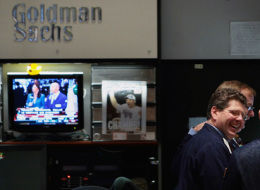
Goldman To Private Insurers: No Health Care Reform At All Is Best

A Goldman Sachs analysis of health care legislation has concluded that, as far as the bottom line for insurance companies is concerned, the best thing to do is nothing. A close second would be passing a watered-down version of the Senate Finance Committee's bill.

A study put together by Goldman in mid-October looks at the estimated stock performance of the private insurance industry under four variations of reform legislation. The study focused on the five biggest insurers whose shares are traded on Wall Street: Aetna, UnitedHealth, WellPoint, CIGNA and Humana.

The Senate Finance Committee bill, which Goldman's analysts conclude is the version most likely to survive the legislative process, is described as the "base" scenario. Under that legislation (which did not include a public plan) the earnings per share for the top five insurers would grow an estimated five percent from 2010 through 2019. And yet, the "variance with current valuation" -- essentially, what the value of the stock is on the market -- is projected to drop four percent.

Things are much worse, Goldman estimates, for legislation that resembles what was considered and (to a certain extent) passed by the House of Representatives. This is, the firm deems, the "bear case" scenario -- in which earnings per share for the top five insurers would decline an estimated one percent from 2010 through 2019 and the variance with current valuation is projected to be negative 36 percent.

What the firm sees as the best path forward for the private insurance industry's bottom line is, to be blunt, inaction.

The study's authors advise that if no reform is passed, earnings per share would grow an estimated ten percent from 2010 through 2019, and the value of the stock would rise an estimated 59 percent during that time period.

The next best thing for the insurance industry would be if the legislation passed by the Senate Finance Committee is watered down significantly. Described as a "bull case" scenario -- in which there is "moderation of provisions in the current SFC plan" or "changes prior to the major implementation in 2013" -- earnings per share for the five biggest insurers would grow an estimated ten percent and the variance with current valuation would rise an estimated 47 percent.

The report, a Goldman official stressed, was analytic not advocacy-based. Their job was to provide a sober assessment of the market realities facing private insurers under various versions of health care reform

"If no reform at all happens you would see the largest rise in EPS," a Goldman official acknowledged. "But what we are doing is just analyzing what the stocks would do under different scenarios."

The study does note on the front page that the firm "does and seeks to do business with companies covered in its research reports." Those companies include Aetna, Wells Point and United Health.

In the context of the current health care debate, the findings provide a small window into the concerns that have driven the private insurance industry's opposition to reform legislation. Simply put: health care reform

Labels: , , , , , ,

Friday, November 13, 2009

Goldman To Private Insurers: No Health Care Reform At All Is Best

A Goldman Sachs analysis of health care legislation has concluded that, as far as the bottom line for insurance companies is concerned, the best thing to do is nothing. A close second would be passing a watered-down version of the Senate Finance Committee's bill.

A study put together by Goldman in mid-October looks at the estimated stock performance of the private insurance industry under four variations of reform legislation. The study focused on the five biggest insurers whose shares are traded on Wall Street: Aetna, UnitedHealth, WellPoint, CIGNA and Humana.

The Senate Finance Committee bill, which Goldman's analysts conclude is the version most likely to survive the legislative process, is described as the "base" scenario. Under that legislation (which did not include a public plan) the earnings per share for the top five insurers would grow an estimated five percent from 2010 through 2019. And yet, the "variance with current valuation" -- essentially, what the value of the stock is on the market -- is projected to drop four percent.

Things are much worse, Goldman estimates, for legislation that resembles what was considered and (to a certain extent) passed by the House of Representatives. This is, the firm deems, the "bear case" scenario -- in which earnings per share for the top five insurers would decline an estimated one percent from 2010 through 2019 and the variance with current valuation is projected to be negative 36 percent.

What the firm sees as the best path forward for the private insurance industry's bottom line is, to be blunt, inaction.

The study's authors advise that if no reform is passed, earnings per share would grow an estimated ten percent from 2010 through 2019, and the value of the stock would rise an estimated 59 percent during that time period.

The next best thing for the insurance industry would be if the legislation passed by the Senate Finance Committee is watered down significantly. Described as a "bull case" scenario -- in which there is "moderation of provisions in the current SFC plan" or "changes prior to the major implementation in 2013" -- earnings per share for the five biggest insurers would grow an estimated ten percent and the variance with current valuation would rise an estimated 47 percent.

The report, a Goldman official stressed, was analytic not advocacy-based. Their job was to provide a sober assessment of the market realities facing private insurers under various versions of health care reform.

"If no reform at all happens you would see the largest rise in EPS," a Goldman official acknowledged. "But what we are doing is just analyzing what the stocks would do under different scenarios."

The study does note on the front page that the firm "does and seeks to do business with companies covered in its research reports." Those companies include Aetna, Wells Point and United Health.

In the context of the current health care debate, the findings provide a small window into the concerns that have driven the private insurance industry's opposition to reform legislation. Simply put: health care reform is going to hurt their bottom line. No less a prestigious voice than Goldman Sachs is telling them so.

Some insurers, in the end, will be hit harder than others. CIGNA is the lowest of the big five, for instance, because it does little business providing insurance plans to Medicare patients, individuals and families buying health plans directly, or small employers that offer health plans to their workers.

In addition, some reforms are going to hurt the industry more than others. Regulatory changes -- such as prohibiting the prejudice against consumers with pre-existing conditions -- will have an impact across the board, as will the funding cuts to Medicare Advantage.

Overall, Goldman calculates the probability of reform passing Congress at 75 percent. Though the limitations of Goldman's political prognostications were on full display earlier in the document:

By mid-late October, we expect a cloture vote (60 votes) to bypass a potential filibuster followed by several weeks of debate over proposed amendments on the Senate floor (with a similar process under way in the House). If both the Senate and House are able to pass legislation (perhaps before the Thanksgiving recess), a House-Senate conference negotiation should produce combined legislation for final approval (perhaps by mid-December).

Labels: , , , , , , , ,

Friday, November 06, 2009

Jon Stewart on the Health Care (Debate? Not sure what you call it)

Health Care: Bigger, Longer and Uncut
The Daily Show With Jon StewartMon - Thurs 11p / 10c
www.thedailyshow.com
Daily Show
Full Episodes
Political HumorHealth Care Crisis

Labels: , , , ,

The Republican Health Plan

Note From Greetings:

No or reduced coverate. Most of the uninsured still uninsured. Ability of insurance companies to cross state lines. INability of states to regulate something the federal government might have. Gee.. um.. what's not to like? (They've had this plan around for years. Why not make it public before? Perhaps to avoid criticism?)
NY Times Editorial, November 6, 2009
House Republican leaders have produced their own health care reform bill. Here is the first thing you need to know: It would do almost nothing to reduce the scandalously high number of Americans who have no insurance. And it makes only a token stab at slowing the relentlessly rising costs of medical care.

Despite that, the Republicans are pitching their bill as far more affordable than the Democrats’ approach. And you are sure to hear a lot in coming days about how it could reduce health insurance premiums. How it compares in that respect with the Democratic proposal is not yet clear. But a lot of the Republicans’ savings on premiums come from reduced coverage. Pay less and get less.

The good news is that this bill has no chance of passing. The bad news is that unless the White House and Congressional Democrats push back with the hard facts, the Republicans could use it to spread false hope of a “cheaper” alternative to scuttle real health care reform.

There’s no question that the Republicans’ bill is cheaper because it does so little to help the uninsured. According to the Congressional Budget Office, it would provide $61 billion over 10 years to expand coverage, compared with more than $1 trillion in the Democrats’ bill.

That paltry effort, the budget office estimates, would extend coverage to a few million people who would otherwise be uninsured in 2019, leaving 52 million citizens and legal residents below Medicare age without coverage or about 17 percent of that population, right where it is today. This is a dismaying abdication of responsibility.

The Republican bill is an amalgam of market-oriented and state-based reforms that conservatives have long proposed, including enhancement of tax-sheltered accounts to help pay premiums and allowing people to buy insurance in other states that might permit skimpier benefits than their home state.

It has some good provisions, such as prohibiting insurers from imposing annual or lifetime caps on what they will pay and automatic enrollment of workers in employer-sponsored group coverage. But it would not prevent insurers from denying coverage or charging higher premiums based on pre-existing conditions.

The Republicans have been railing that the Democratic reforms will do little to slow the rapid rise in medical costs. But neither party has a solution. The Republican bill would cap malpractice awards — a clear infringement of the rights of injured patients. It would get lesser savings by requiring electronic transactions for administrative tasks and opening an approval process for generic biological medicines. The Democratic bills would use both of those for savings and initiate an array of pilot projects to try to find solutions.

The Republican bill’s main emphasis is on reducing the cost of health insurance premiums, a real concern. Compared with current trends, the Congressional Budget Office estimates that under the Republican bill, the average premium would drop by 7 to 10 percent for employees enrolled in group plans at small businesses and by 5 to 8 percent for people who buy their own policies. At large employers, where most Americans get group coverage, the average premium might drop by a modest 0 to 3 percent.

Part of the premium reduction was attributed to savings in the cost of medical services. But much was attributed to shrinking the services covered. The Democrats plan to set minimum benefit requirements to protect people from skimpy policies that leave them without adequate protection when they need it.

The budget office is planning to estimate how the far more complex Democratic bills would affect premiums. Americans need to know that so they can make a full comparison. But there should be no illusions here. The “affordable” Republican health care reform isn’t health care reform. from Greetings:

Labels: , , , , ,

Wednesday, September 30, 2009

Rick Scott profits off the uninsured

A leading foe of healthcare reform owns a chain of clinics aimed at people who would benefit from a public option

-- By Tristram Korten Sep. 30, 2009 Salon.com

For months now multimillionaire healthcare entrepreneur Rick Scott has been at the center of the aggressive campaign to derail healthcare reform in Washington, D.C. Reprising the role he played nearly 20 years ago, when as the head of a national hospital chain he helped kill Clintoncare, the former hospital-chain executive founded the group Conservatives for Patients' Rights, raising $20 million to fight Obamacare, including $5 million of his own money. The tall, lean Scott, whose shiny bald head swivels in exasperation at the idea of government involvement in healthcare, even stars in its nationwide ad campaign comparing Democratic proposals to socialized medicine. Through this group, he has fomented the conservative strategy to disrupt town hall-style healthcare meetings around the country by shouting down elected officials. (CPR sent schedules of the meetings to so-called Tea Party activists.) He can justifiably claim some of the credit for the Senate Finance Committee's two votes Tuesday against a public option. But in Rick Scott the right has found a frontman whose baggage threatens to overwhelm his message.

A linchpin of Scott's 2009 campaign has been the use of anecdotes from abroad -- horror stories from Britain and Canada meant to illustrate how government-controlled healthcare systems "clearly kill people" by controlling their access to care, as he told Fox's Sean Hannity in June. He even funded a documentary titled "Faces of Government Healthcare" cataloging the horror stories of British and Canadian patients who were purportedly denied medical attention for life-threatening illnesses until it was too late.

Yet even as Scott makes the rounds of Congress and talk-show green rooms, a wrongful death lawsuit has been working its way through the Florida courts against a doctor employed by the chain of walk-in clinics Scott founded. Scott has repeatedly bragged that the 27-clinic, Florida-based company, Solantic, is an example of the free-market ingenuity needed to fix our ailing medical infrastructure. The lawsuit, however, alleges a Solantic doctor misdiagnosed a patient's deep-vein thrombosis as a sprained ankle, leading to a pulmonary embolism and death. That same doctor was reprimanded by the state for misdiagnosing deep-vein thrombosis in a patient who died two years earlier. It's the kind of anecdote you'd expect to hear in Scott's documentary -- except that it condemns a free-market system where profit and patient volume may take precedence over care.

And this isn't the first time that Scott's warnings about the ills of socialist medicine have found an ironic echo in his own healthcare business. Scott argues that socialized medicine rations care and strangles competition, yet just after his first stint as anti-reform spokesman in the 1990s, while he was running the world's largest healthcare company, he was accused of monopolizing markets and choking out the competition while slashing the chain's costs to the point that it affected patient care. And while he asserts that two of the core principles of healthcare reform are "accountability" and "personal responsibility," Scott ran a company that ultimately pleaded guilty to defrauding the government in one of the nation's largest Medicare frauds ever. Two executives went to prison, the company paid almost $2 billion in fines, and Scott was pushed out of the company. Before he could retake the political stage, he had to build his healthcare business all over again.

In the end, Scott's virulent opposition to Democratic healthcare proposals may simply be a business decision. The post-millennial incarnation of Rick Scott has plunged into several new healthcare businesses that could be adversely affected by reform. Among other healthcare businesses, Richard L. Scott Investments has invested in a pharmacy company, Pharmaca, where one of his employees sits on the board of directors. Drug manufacturers are opposed to a Medicare-type entity that could negotiate bulk purchases of drugs and drive down the cost of their products. More important, Scott's Solantic bills itself as a low-cost alternative to people who would otherwise go to emergency rooms for their immediate care needs -- i.e., the uninsured and people paying out-of-pocket expenses as a result of diminished insurance plans -- the very people reforms are intended to cover.

Solantic's very existence is an implicit acknowledgment that healthcare costs have not been reined in by free-market forces. Scott himself boasts that a person paying out of pocket will spend at least 10 times less at a Solantic clinic than in a hospital emergency room. That's because hospitals have to charge insured patients a premium to help cover the costs of the uninsured, who often can't pay the full price for medical care, and may skip out on paying altogether. (The Center for American Progress, a liberal think tank that supports a public option in healthcare reform, estimates there is an $1,100 cost shift to family premiums in order to cover the uninsured.) As insurance premiums rise as a result, businesses are turning to higher-deductible plans for their employees, which forces Americans who do have health insurance to pay more in out-of-pocket expenses.

Solantic makes its profit on the spread in this system. "He's there to catch everyone who doesn't have access to regular healthcare," says the Center for American Progress's Igor Volsky. "It's just a business opportunity."

- - - - - - - - - - - -

Richard Lynn Scott was raised in Kansas City, Mo. His father was a truck driver, his mother a department store clerk who sold encyclopedias door-to-door to augment their income. After high school he joined the Navy, then attended the University of Missouri, while working full-time at a grocery store. It was also during college that he exhibited his entrepreneurial drive, buying two doughnut shops for his mother to manage. Ultimately, he decided to become a lawyer, and attended the law school at Southern Methodist University in Dallas, staying in town afterward to practice at a large firm, Johnson & Swanson, where he represented hospitals in mergers and acquisitions. It's there that he began to see healthcare in terms of its business components and profit potential.

He had no medical background and never operated a hospital or ran a clinic, but at some point decided he wanted to own hospitals. In 1987 Scott made a failed bid on behalf of some investors to buy the Hospital Corporation of America, a hospital chain founded by members of the Frist family, including Dr. Thomas Frist Sr., the father of then-U.S. Sen. Bill Frist. But the Frists rejected the offer. The move, however, brought him to the attention of Richard Rainwater, a politically connected investor with ties to the Bush family. Rainwater had made a fortune investing for the wealthy, including George W. Bush. At one point Rainwater, who owned a big chunk of the Texas Rangers and brought Bush in as the team's managing partner, brought in Scott as an investor in the team as well.

In 1987 Rainwater and Scott partnered, and with the initial purchase of two hospitals in El Paso, Texas, formed the Columbia Healthcare Corp. They took their company public and used the money to buy hospitals at a fast clip, focusing on dominating specific markets by buying several hospitals in a region and closing the poor-performing ones. They slashed costs, cutting jobs and hours, and bought bulk supplies at discount. Wall Street rewarded them. By 1994 they had enough capital to buy Scott's original target, HCA. The combined company, rechristened Columbia/HCA, would grow to more than 340 hospitals, 135 surgery centers, 550 home health locations in 37 states and two foreign countries, making it the largest healthcare company in the world. Scott moved to HCA's corporate headquarters in Nashville, Tenn., as CEO.

Although Scott, through Rainwater, hobnobbed with politicos, he was not known as a political animal. He was a workaholic. His political contributions in those days were to trade groups like the Federation of American Health Systems, and to people associated with his business, like Bill Frist's Senate campaign. "I do not recall that he was a major political player back in either the '80s or early '90s, even though he had these connections to Bush through Rainwater," says R.G. Ratcliffe, a veteran political reporter for the Houston Chronicle, who has covered Texas politics, and Rainwater, for 30 years.

Scott himself was an unassuming man, even as his company made financial news across the country. Maggie Mahar, a journalist for the business magazine Barron's in those days, flew down to meet Scott in order to write a profile, but found a man so undynamic she had to change the focus of her story. "He was supposed to be a new up-and-comer, and I just didn't get it," she recalls. "Usually someone who runs a large corporation has a large personality, if not intelligence. With Scott there just wasn't enough there, so I wrote about whether tax breaks for nonprofit hospitals were unfair to for-profit hospitals."

Yet when the Clinton White House began aggressively pushing healthcare reforms, it was Scott who took up the role as frontman for his company, voicing opposition to industry groups and the media. "What's happening in Washington is not healthcare reform," he was quoted in the New York Times as saying to a group of Tampa hospital executives in 1994. "Healthcare reform is happening in the market place." Many suspect he was urged to do this by the Frists, who still retained much control of the company.

The Center for American Progress put together a video montage showing that Scott's talking points today are almost exactly the same as they were in 1993 and 1994. He was at the top of his game then, a man Time magazine praised in 1996 as one of the 25 most influential Americans, alongside Jerry Seinfeld and Sandra Day O'Connor. "In an industry notorious for waste and inefficiency, Scott aggressively consolidates operations and imposes cost controls," Time lauded in its article. One of the examples Time cited was Scott and Rainwater's investment in the two El Paso hospitals, followed by the purchase of a third nearby, which they promptly closed to drive up revenue at the other two.

Others were not so smitten. Journalist Mahar studied Columbia/HCA's business model for her book "Money-Driven Medicine: The Real Reason Healthcare Costs So Much." Hospitals were traditionally seen as a nonprofit business because they provide an essential service to society, Mahar explains. "Hospitals are a necessity like gas and electricity," she says. "We regulate those industries. We don't allow prices to skyrocket. The same thing in healthcare. We don't want hospitals gouging sick people." But in the 1980s, she says, ambitious investors began to see healthcare as a way to make money. Chief among them was Scott.

"What Rick Scott wanted, and his shareholders wanted, was for healthcare to be a growth industry where revenues go up every year," says Mahar, now a fellow at the public-policy think tank the Century Foundation. "I think it's basically impossible to achieve the level of profitability they wanted in the hospital business. You can't expect double-digit profits from a hospital. It's a very tough business. You need a lot of people. You need a good nurse-to-patient ratio to keep patients comfortable and respond to emergencies. And it's unpredictable; you don't know how many patients on a night shift are going to get sick. So you can't trim down to the bone. When you do, people die."

Columbia/HCA regularly posted double-digit growth that paid big dividends to shareholders. BusinessWeek recognized it as one of the 50 best-performing companies on the S&P 500. But in her book Mahar cites examples of how the cost cutting at Columbia/HCA impacted care. One technician complained of having to watch 72 heart monitors at one time. Nurses at an Indianapolis hospital complained to state authorities that babies in the neonatal unit were left unattended for up to three hours. In one case a nurse caring for seven infants was so busy she failed to hear an alarm when a baby stopped breathing; the child was saved when a parent rushed in. The state fined the hospital.

Other, bigger problems were looming. In the mid-1990s, aided by a former accountant who became a whistle-blower, the feds opened an investigation into suspicions that Columbia/HCA hospitals were routinely defrauding the government by inflating the expenses of procedures billed to Medicare, and paying illegal kickbacks to doctors who steered patients to Columbia/HCA hospitals. In July 1997, a year after Time's coronation, federal agents raided Columbia/HCA hospitals in more than half a dozen states, and carted away reams of paperwork. Some hospitals were discovered to have two sets of books, one reflecting the true costs for procedures and another with inflated expenses charged to Medicare. Four executives were indicted; two were found guilty and sent to prison. Rather than continue to fight the government, company executives decided to have Columbia/HCA plead guilty to 14 felonies. The hospital giant ended up paying $1.7 billion in fines and settlements.

Scott was not indicted in the scandal and has protested that he never condoned any illegal activity. He has asserted that federal agents never even interviewed him. But Columbia/HCA's board found him an unpleasant symbol of the problem and voted to oust Scott almost immediately after the scandal erupted in 1997, paying him a $9.88 million severance package, along with 10 million shares of stock worth up to $300 million at the time, to walk away.

Mahar lays much of the blame for Columbia/HCA's illegal acts at Scott's feet. He cultivated a corporate culture where profit was the most important thing, and, as she put it in her book, "executive salaries hinged not on such criteria as reducing infections or lowering death rates, but on meeting financial targets like 'growth in admissions and surgery cases.'"

- - - - - - - - - - - -

Scott was stung by his fall. He retreated into finance, starting the investment firm Richard L. Scott Investments in Connecticut, that bought stakes in a variety of industries, including a TV network devoted to health news (later acquired by Fox) and a computer security firm. But he clearly wanted to reestablish himself as a healthcare player.

A few years after his HCA ouster he got his chance when he and a former Columbia/HCA marketing executive named Karen Bowling conceived of a chain of urgent-care clinics. They collaborated on a business plan for a company that would provide a retail experience not unlike Starbucks or McDonald's -- convenient, affordable, with a focus on "customer satisfaction." In 2001 Scott funded it. The company, based in Jacksonville, Fla., was formed as a service to people who would otherwise visit overburdened emergency rooms with relatively routine problems, such as broken bones, sprains and minor infections, to patients who need to see their primary care doctor for matters such as immunizations and physicals but would have to wait days or even weeks for an appointment. The clinics were designed to be open 12 hours a day, seven days a week. Today, there are 27 Solantic clinics, all in Florida.

Karen Bowling is a cheery former Jacksonville TV reporter. She began working for Scott in the late 1980s when Columbia/HCA gobbled up the Jacksonville hospital where she was the marketing director. She has been a faithful Scott ally ever since, even leaving her job with Columbia/HCA when Scott was ousted. She worked for various of his companies before starting Solantic. "We both really believed healthcare should be more convenient for patients," Bowling says.

Bowling insists the majority of clients are insured, and just want the no-wait convenience of a Solantic clinic. But Scott's repeated emphasis on the cost savings for those paying cash implies the company sees the uninsured as a market to be tapped. "We're probably one-tenth to one-fifteenth the cost if you're just writing a check and going to the E.R.," he boasted to Texas Rep. Michael Burgess in a made-for-YouTube interview the congressman shot. And most press reports identify Solantic as targeting the uninsured. The New York Times described Solantic as a "chain of urgent care clinics which Mr. Scott promotes as inexpensive alternatives to emergency rooms, especially for the uninsured." And why not? With an estimated 45 million to 47 million Americans without health insurance right now, it would seem a smart business move. But just as happened with his first healthcare empire, Scott's newest business raises questions about the compatibility of a corporate bottom line with quality patient care.

- - - - - - - - - - - -

One of Scott and Bowling's initial hires at Solantic was Dr. David Yarian, the company's first regional medical director. His job was to create the clinical design for the urgent-care centers. Yarian lasted roughly five months. He clashed repeatedly with Scott over hiring practices. They also had philosophical differences about how to set up the clinics. Solantic initially designed them so that there would be one doctor and one physician's assistant on staff for 12-hour shifts to meet a steady stream of patients, Yarian says.

"The whole design was for people to get in and out quickly," Yarian says. "I believe the target was 50 patients a day based on a 12-hour day. But no clinic works that way, especially urgent-care clinics where people don't make appointments." The business is too unpredictable. "But Rick and Karen had never run a clinic. He wanted to turn it into a McDonald's. His whole point was volume and speed."

Yarian knew about Scott's past, and he worried that Scott was emphasizing profits over patients again.

"It was made very clear to me this was a numbers game," Yarian says. "The doctors were going to be evaluated on the number of patients they saw. This is exactly what happened at his hospitals."

After one clash too many, Scott and Bowling fired Yarian in November of 2001. Yarian sued for breach of contract and ended up settling with the company.

Scott, in a statement to Salon, declined to address Yarian's criticisms and dismissed him as a "disgruntled employee."

In 2004, three years after Yarian's brief tenure, Solantic hired Dr. Nadeem Maalouli as one of the doctors for its Orange Park clinic just outside Jacksonville. It's not clear if the company knew it at the time of his hire, but Maalouli was being investigated by state health officials for a botched diagnosis. In September 2002 Maalouli was working in a hospital emergency room when he treated a 32-year-old woman complaining of shortness of breath, chest pain and possibly blood-tinged sputum, according to a complaint by the Florida Department of Health. But after Maalouli examined her, the complaint states, he found her "normal." In fact, Maalouli had failed to detect the woman's deep vein thrombosis (DVT). Four days later the woman suffered a pulmonary embolism and died. In 2007 the state's Board of Medicine ultimately ruled that Maalouli's failure to detect the DVT had violated medical standards and reprimanded him. Maalouli agreed to pay a $15,000 fine and to take a continuing education course in detecting pulmonary embolisms.

That case was winding its way through the state's bureaucracy when Maalouli started at Solantic. (Maalouli through his lawyers declined to comment for this article). Then, on March 16, 2005, Tanieta Ogden Shuler, a 31-year-old Jacksonville woman, limped into his clinic, according to information taken from court and medical records. It was around 8 p.m., right before closing, and Shuler complained of a pain shooting from her right heel up the back of her leg. Dr. Maalouli, who was finishing a 12-hour shift, examined Shuler and diagnosed a sprained ankle. He recommended she keep her foot elevated, treat it with ice, and use crutches for the time being. Then he prescribed Motrin 800 and Darvocet for the pain.

Six days later Shuler followed up with a podiatrist who recommended an MRI to see why the pain was persisting, a task Shuler put off. The next day, at about 7 p.m. on March 29, Shuler was rushed to the emergency room at Memorial Medical Center, where she died. An autopsy revealed that Shuler suffered from DVT in her leg, which caused a pulmonary embolism.

In their lawsuit, Shuler's family asserts that Maalouli's examination fell below the accepted standard of care because he didn't send her off to get a sonogram or other tests to double-check his assessment (the clinics don't have sonograms). Maalouli's and Solantic's lawyers dispute that, saying all indications pointed to a sprained ankle, and that it's likely Shuler didn't even have the DVT when she came in to be examined.

Questions likely to come up at trial include whether the company's supposed emphasis on numbers pushed Dr. Maalouli to see Shuler as the clinic was closing, after he had worked a 12-hour shift, and whether Maalouli did not send her off for further tests because he might have lost a client to another facility.

Bowling declined to comment on this case because it is still in the court system. "It's important to say it hasn't gone to trial and it's outcome hasn't been determined yet," she says.

And of course, one wrongful death case, amid the 1.7 million visits to Solantic's 27 clinics, according to company statistics (counting multiple visits by the same patient), is not a condemnation of the entire business model. But it is an uncomfortable fact for Scott to deal with as he travels the world cherry-picking horror stories from countries that use government run systems.

After all, a doctor at a for-profit clinic that relies on high patient turnover, who is called to account for two alleged misdiagnoses ending in two deaths, is right up there with the examples from Scott's documentary -- the English woman denied routine pap smears for two years until she was diagnosed with fatal cervical cancer, or the Canadian man who had to wait 20 months for an appointment regarding his heart arrhythmia, and finally came to the U.S. for treatment.

Aside from the paradox the wrongful death suit puts Scott's example-rich campaign against socialized medicine in, it also counters his boast that Solantic is the kind of free-market exemplar that can fix our healthcare industry. Urgent care clinics provide a service, but only for the most uncomplicated procedures. Doctors don't review a patient's past medical history. There is no ongoing primary care offered. They have limited testing abilities. Other than X-ray machines the facilities don't have any advanced equipment. This is not the solution for the nation's uninsured.

"For very limited things it could work," says author Mahar. "But one problem with this transparent pricing is that if I go in with a terrible stomach pain, no one knows where this is in the price plan until they start examining me. How can they possibly tell me when I stagger in how much it will cost to treat me? Even something as simple as a headache, well I could have a tumor. Basically healthcare is not a commodity that can be neatly priced."

Even Bowling concedes it is no replacement for ongoing care from a physician. "I think people should rely on us for episodic care," Bowling explains. "As a policy we refuse patient requests to be the primary care physicians."

And Rick Scott has never proposed his own full-length healthcare plan, though he has ventured a few specific proposals -- transparent pricing by insurance companies and standardized forms for insurance submissions. Mostly, Scott knows what he's against.

Solantic's target customers -- not only the uninsured, but the self-employed, and small businesses seeking to provide insurance to employees -- are the ones advocates say would benefit most from some kind of affordable healthcare option, even if it was provided by the government. Reforms that would make sure every American had access to affordable health insurance might put Solantic's business plan in jeopardy, giving Scott incentive to gum up the works. "I think those kinds of clinics will become less popular as everyone becomes insured," notes the Center for American Progress's Volsky.

It was only after founding Solantic that Scott began to invest heavily in politics again. He moved from Connecticut to Naples, Fla., along with the bulk of his investment company, and became increasingly active in Republican activities. From 2004 through 2009, he has given $67,000 to Republican candidates and organizations, according to the Federal Election Commission, including $25,000 to the Republican National Committee in 2004, and another $28,000 in 2008.

Then, in February 2009, after the Obama administration announced that reforming healthcare was a priority, but before any concrete plans were announced, Scott reclaimed his mid-'90s soapbox. He charged in with his money and organizational support and helped the diminished GOP galvanize the anti-reform cause, quickly emerging as perhaps the most vocal and prominent conservative voice on the issue. He launched Conservatives for Patients' Rights, which promotes what it sees as the four pillars of healthcare reform -- choice, competition, accountability and personal responsibility. He chose to become its spokesman, appearing in a series of ads put together by Creative Response Concepts, the P.R. firm involved in the Swift Boat Veterans for Truth campaign to discredit Sen. John Kerry's presidential bid. The healthcare ads have aired on CNN and Fox, as well as the Web site Politico.com, and he has penned opinion pieces on RealClearPolitics.com.

In mid-July Scott's group organized a conference call with 104 conservative leaders, plotting a strategy to drag out the healthcare debate in Congress until they have enough popular momentum against reform. Participants in the meeting came out energized. "This healthcare issue is D-Day for freedom in America," South Carolina Sen. Jim DeMint was quoted in Politico.com as saying. "If we're able to stop Obama on this it will be his Waterloo. It will break him."

For Scott that would no doubt be good for business.

Labels: , , , , , , ,

Tuesday, September 22, 2009

Protect Insurance Companies

Labels: , , , ,

When Getting Beaten By Your Husband Is A Pre-Existing Condition

It turns out that in eight states, plus the District of Columbia, getting beaten up by your spouse is a pre-existing condition...

Ryan Grim, Huffington Post, September 22

With the White House zeroing in on the insurance-industry practice of discriminating against clients based on pre-existing conditions, administration allies are calling attention to how broadly insurers interpret the term to maximize profits.

It turns out that in eight states, plus the District of Columbia, getting beaten up by your spouse is a pre-existing condition.

Under the cold logic of the insurance industry, it makes perfect sense: If you are in a marriage with someone who has beaten you in the past, you're more likely to get beaten again than the average person and are therefore more expensive to insure.

In human terms, it's a second punishment for a victim of domestic violence.

In 2006, Democrats tried to end the practice. An amendment introduced by Sen. Patty Murray (D-Wash.), now a member of leadership, split the Health Education Labor & Pensions Committee 10-10. The tie meant that the measure failed.

All ten no votes were Republicans, including Sen. Mike Enzi (R-Wyoming), a member of the "Gang of Six" on the Finance Committee who are hashing out a bipartisan bill. A spokesman for Enzi didn't immediately return a call from Huffington Post.

At the time, Enzi defended his vote by saying that such regulations could increase the price of insurance and make it out of reach for more people. "If you have no insurance, it doesn't matter what services are mandated by the state," he said, according to a CQ Today item from March 15th, 2006.

Robert Zirkelbach, a spokesman for an insurance industry trade group, America's Health Insurance Plans (AHIP), said that the National Association of Insurance Commissioners (NAIC) has proposed ending the discrimination. "The NAIC has a model on this that we strongly supported. That model bans the use of a person's status as a victim of domestic violence in making a decision on coverage," he said.

During the last health care reform push, in 1993 and 1994, the industry similarly promised to end discrimination against people with pre-existing conditions.

Murray pushed to include the domestic violence concern in this year's comprehensive health care bill. "Senator Murray continues to believe that victims of domestic violence should not be punished for the crimes of their abusers. That is why she worked to include language in the Senate HELP Committee's health insurance reform bill that would ban this discriminatory and harmful insurance company practice," said spokesman Eli Zupnick.

In 1994, then-Rep. Charles Schumer (D-N.Y.), now a member of Senate leadership, had his staff survey 16 insurance companies. He found that eight would not write health, life or disability policies for women who have been abused. In 1995, the Boston Globe found that Nationwide, Allstate, State Farm, Aetna, Metropolitan Life, The Equitable Companies, First Colony Life, The Prudential and the Principal Financial Group had all either canceled or denied coverage to women who'd been beaten.

The Service Employees International Union asked members to write letters to Congress regarding the exclusion and have quickly generated hundreds, says an SEIU spokeswoman.

The relevant provision:

SEC. 2706. PROHIBITING DISCRIMINATION AGAINST INDIVIDUAL PARTICIPANTS AND BENEFICIARIES BASED ON HEALTH STATUS.

'(a) IN GENERAL.--A group health plan and a health insurance issuer offering group or individual health insurance coverage may not establish rules for eligibility (including continued eligibility) of any individual to enroll under the terms of the plan or coverage based on any of the following health status-related factors in relation to the individual or a dependent of the individual:

(1) Health status.

(2) Medical condition (including both physical and mental illnesses).

(3) Claims experience.

(4) Receipt of health care.

(5) Medical history.

(6) Genetic information.

(7) Evidence of insurability (including conditions arising out of acts of domestic violence).

(8) Disability.

(9) Any other health status-related factor determined appropriate by the Secretary.

UPDATE: The eight states that still allow it are Idaho, Mississippi, North Carolina, North Dakota, Oklahoma, South Carolina, South Dakota and Wyoming, according to a report by the National Women's Law Center.

UPDATE II: Scratch the Tar Heal state from that list. North Carolina insurance commissioner Wayne Goodwin had his staff research the state's law and his attorneys concluded that insurers in that state would not be allowed to use domestic violence as a pre-existing condition. Group plans were specifically forbidden from using it thanks to a 1997 law, he said. For individuals and non-group plans, it's more complicated.

"Though there is not a specific statute for individual plans or non-group plans, there is another statute that our attorneys here tell us addresses this issue. For example, North Carolina law defines what a preexisting condition is. Now, here in North Carolina, it says a preexisting condition means - quote - those conditions for which medical advice, diagnosis, care or treatment was received or recommended within a one year period immediately preceding the effective date of the person's coverage." Domestic violence, he said, doesn't met the state's definition of a medical condition and so can't be used as a pre-existing condition.

Wyoming Department of Insurance staff attorney James Mitchell said the state's insurance laws do not ban insurers from using domestic violence as a pre-existing condition, but his staffers were unable to find cases of insurers having done so and he said they had not received any complaints. "We are not aware of any policies that have been submitted to us that addressed domestic violence as a pre-existing condition," he said. The remaining six states have yet to respond.

UPDATE TO UPDATE II: A few readers have noted that the ambiguity of North Carolina's law regarding individual and non-group plans could still leave domestic violence victims vulnerable to discrimination. And Commissioner Goodwin himself, in a Facebook note summarizing my conversation with him, does say "that North Carolina's law on this subject vis-a-vis individual/non-group plans could be clarified and made more direct, and that we should also consider the NAIC national model law on the subject, too. The legislature doesn't return until May 2010, so there is time to work on the best way to clarify this issue for folks while educating them in the meanwhile."

He posted his response on the FB page of journalist Christine Tatum, who had posted a link to this story and asked her friends to contact him. Goodwin noted on her wall that allowing insurance companies to discriminate against domestic violence victims is a tragedy and something he wouldn't allow in his state.

North Carolina, however, given the fuzziness of the law, still belongs on a list of states whose laws could be clarified to assure that domestic violence victims aren't denied coverage or charged higher premiums. Forty-two states have made that specific clarification and the Senate health committee bill would do so nationally.

If you're an attorney with experience in this field and want to weigh in, write me at ryan@huffingtonpost.com.

UPDATE III: Mississippi Insurance Commissioner Mike Chaney provided the following statement through a spokeswoman:

Mississippi does not at this time have a law which bans insurance companies from considering domestic violence as a pre-existing condition. However, the reason there is not such a law is that there has not been a problem with insurance companies denying coverage or refusing to pay the claims of domestic violence victims in this state. If it were an issue, the Legislature and the Department would have addressed it by now.

The Mississippi Department of Insurance is unaware of any insurance company operating in this state that would deny coverage if the applicant had been a victim of domestic violence. Nor have we received any complaint from a consumer stating their insurance company refused to pay their medical bills incurred from domestic violence. Such action by an insurance company would not be tolerated by the Department.

It is the position of the Department that if an insurance company denied payment of a claim incurred in an act of domestic violence, such action would be a violation of the Unfair Trade Practices Act, as promulgated in Miss. Code Ann. §§ 83-5-29 through 83-5-51, and the Department would take the appropriate action.

Should the Mississippi Legislature choose to enact legislation addressing this issue, the Mississippi Insurance Department would be very supportive of the passage of such legislation.

UPDATE TO UPDATE III: Mississippi Insurance Commissioner Mike Chaney was much blunter in an interview with the Jackson Free Press:

"The truth is we've got eight states in the union that count domestic abuse as a pre-existing condition, and Mississippi is one of them," Chaney told the Jackson Free Press. "I've got to get some of my lawyers to do some research on this, but we have only six mandated (conditions that must be covered) in our state statues, and we have 25 or more optional coverages, but domestic abuse doesn't seem to be one of them."

Chaney said all insurance companies in the state can take advantage of the state's limited coverage mandate, and that he would prefer the state to change its law to force insurance companies to cover victims of domestic abuse.

"Would I do something about it? Hell, yeah, I'd do something about it, but I'm a regulator, not a legislator. I have to come to terms with that every week," Chaney said. "The whole situation is bad. Let's say a woman works with a company that had Blue Cross/Blue Shield, and she gets beat up in her house and Blue Cross says 'we're not covering you because getting beat up is your pre-existing condition.' That's terrible."

Read the whole story here.

UPDATE IV: North Dakota Insurance Commissioner Adam Hamm, a former violent-crimes prosecutor, told the Huffington Post that he and Gov. John Hoeven (R) are working to change the standing policy in their state. "To put it mildly, Wayne and I are on the same page," he said, referring to the North Carolina insurance commissioner.

After a consumer alerted him Tuesday via e-mail, Hamm said, "Quite frankly, I was stunned and I couldn't believe it." His office then contacted Blue Cross-Blue Shield, Medica, John Alden and American Family, who together account for 98 percent of the state's health insurance policies, and none of the four companies treat domestic violence as a preexisting condition, he said. Nor has the state insurance department recorded any complaints of being denied care on those grounds.

"We have no record of any of that ever occurring in our state," Hamm said. "So we're obviously happy about that."

To keep it from happening in the future, the state insurance department will push legislation as soon as possible, Hamm said. Since the North Dakota legislature only meets every other year, he projected a 2011 vote.

In the meantime, Hamm said he wants to know why North Dakota never joined the 42 other states who passed bans years ago. Agents are combing legislative files going back to the mid-1990s to see if such a measure was ever introduced, he said.

UPDATE V: State Farm writes in to note that it has changed its policy since that 1995 Boston Globe story and no longer discriminates against victims of domestic violence.

A follow-up Globe item reported that "recent 'media attention,' and the company's own research, caused the company to revise its policy, [spokeswoman K.C.] Eynatten said. State Farm no longer 'rates or denies life or health insurance to battered women, even if there's a history of domestic violence.'

It went on: "'We realized our position was based on gut feelings, not hard numbers,' Eynatten said, explaining the change. 'And we became aware that we were part of the reason a woman and her children might not leave an abuser. They were afraid they'd lose their insurance. And we wanted no part of that.'"

Labels: , , , , , , ,

Few individual health policies cover maternity

Anthem Blue Cross' Singer said that those states have much higher rates for individual insurance coverage than California. "The point of insurance is to insure against catastrophic care costs," he said. "Having a child is a matter of choice."


The number of individual health insurance policies that do not include maternity coverage has risen dramatically in recent years, prompting concern among consumers and a legislative effort to require California insurers to include the benefit.

About 805,000 Californians have insurance policies that specifically exclude maternity coverage - a number that has more than quadrupled from 192,000 in 2004, according to the California Health Benefits Review Program, which provides independent analysis of proposed health insurance benefits mandates.

"You see this tremendous jump in just a few years. That's where we're going with this," said Assemblyman Hector De La Torre, D-South Gate (Los Angeles County), whose bill to require maternity coverage is headed to the Assembly Health Committee today. Insurance companies are "pushing these policies clearly onto people, and people are making their decisions based solely on dollars and cents."

As more people lose their jobs - and along with that, their health insurance benefits - an increasing number are expected to turn to the individual health insurance market for coverage, an option that is usually less expensive than paying to stay on their former employers' health plans.

De La Torre's bill, AB98, would require all health insurance products regulated by the state Department of Insurance to include maternity benefits. Gov. Arnold Schwarzenegger vetoed a similar bill authored by De La Torre last year as well as one introduced in 2004 by then-Sen. Jackie Speier, D-Hillsborough.

Health insurers and consumers who support the right to buy a policy that excludes maternity benefits say they shouldn't have to pay for a service they have no intention of using. They say requiring such coverage would increase premiums and force more people to go without insurance.

"Clearly there are a number of people out there who don't think they need or want a maternity benefit at this point in their lives and recognize there is a significant reduction in costs associated with this," said Ben Singer, spokesman for Anthem Blue Cross, which covers about half of the individual policyholders in the state who do not have maternity coverage. Singer said requiring the benefit could increase premiums by as much as 107 percent for some members.

Shared risk

Supporters of the mandate, however, argue that denying coverage is unfair to women and that, in exchange for an average $7.17, or 4.24 percent, increase in monthly premium price per individual policyholder, society would save money if fewer women were on government-supported programs.

De La Torre argued that excluding maternity flies in the face of the insurance philosophy of shared risk. "Why do women pay for prostate cancer? Why do men pay for breast cancer? Because that's the whole point of insurance," he said.

The controversy is limited to individual insurance coverage because group policies, those provided by an employer or group, include maternity benefits. Health maintenance organizations, or HMO plans, are required by the state to have maternity coverage, but preferred provider organization, or PPO, service plans are free to exclude the benefit.

People who buy individual plans typically do not have access to group coverage. They can be self-employed, work for an employer that does not provide health insurance or simply choose such policies as the most affordable options.

But with the growing popularity of such policies without maternity coverage - such as Anthem Blue Cross' low-cost Tonik plans, which are geared toward young adults - finding an affordable individual plan with the coverage can prove to be a daunting task.

No good options

When Wendy Root Askew of Monterey started looking for a doctor she hoped would be her gynecologist as well as deliver her future children, she was shocked to discover her health insurance policy didn't include a single OB/GYN in her county.

The 31-year-old considered changing health plans. But then she learned that while 85 percent of the plans available in Monterey County offered maternity coverage five years ago, just 15 percent offer it now.

She found only two individual policies that included maternity, but they were three to five times as much as the policy she already had and came with annual deductibles of up to $15,000.

"Who's going to be buying policy with a $10,000 or $15,000 deductible? Clearly only those women who are intending to use the service," said Askew, who went from running her own business to working for an employer that offers group health insurance. She said she made the decision in part because the job offered comprehensive health benefits.

Health insurers are not uniformly against mandating maternity benefits. Kaiser Permanente, which as an HMO is required to include maternity, has supported maternity mandates along with Blue Shield of California, which has come out in favor of De La Torre's bill. The California Association of Health Plans has not taken a position, while another insurance trade group, the Association of California Life & Health Insurance Companies, publicly opposes the bill.

Higher individual rates

Several states, including Massachusetts, New Jersey and New York, already have laws in place requiring plans to pay for maternity services.

Anthem Blue Cross' Singer said that those states have much higher rates for individual insurance coverage than California.

"The point of insurance is to insure against catastrophic care costs. That's what you're trying to aggregate and pool for such things as heart attacks and cancer," he said. "Having a child is a matter of choice. Dealing with an adult onset illness, such as diabetes, heart disease breast or prostate cancer, is not a matter of choice."

Patricia Bellasalma, president of the California National Organization for Women, noted that not all pregnancies are planned. She said some insurance companies are discriminating against women.

"The philosophy of the insurance company on maternity coverage - the only pool of risk takers are women - is that all of the obligations to pay for child bearing is born solely on the woman and not on the man and not on society, which is just outrageous," she said.

Women in California pay an estimated 39 percent more than men for coverage in the individual market. San Francisco City Attorney Dennis Herrera filed a lawsuit against the state in January over the issue. Legislation also has been introduced by state Sen. Mark Leno, D-San Francisco, and Assemblyman Dave Jones, D-Sacramento, to forbid gender rating.

Labels: , , , , ,

Tuesday, September 15, 2009

Poll Finds Most Doctors Support Public Option

by Joseph Shapiro
September 14, 2009 , NPR

Among all the players in the health care debate, doctors may be the least understood about where they stand on some of the key issues around changing the health care system. Now, a new survey finds some surprising results: A large majority of doctors say there should be a public option.

When polled, "nearly three-quarters of physicians supported some form of a public option, either alone or in combination with private insurance options," says Dr. Salomeh Keyhani. She and Dr. Alex Federman, both internists and researchers at Mount Sinai School of Medicine in New York, conducted a random survey, by mail and by phone, of 2,130 doctors. They surveyed them from June right up to early September.

Most doctors — 63 percent — say they favor giving patients a choice that would include both public and private insurance. That's the position of President Obama and of many congressional Democrats. In addition, another 10 percent of doctors say they favor a public option only; they'd like to see a single-payer health care system. Together, the two groups add up to 73 percent.

When the American public is polled, anywhere from 50 to 70 percent favor a public option. So that means that when compared to their patients, doctors are bigger supporters of a public option.

Doctors' Support For Public Option 'Broad And Widespread'

Enlarge Mario Tama/Getty ImagesDoctors and other supporters of health care overhaul attend a candlelight vigil in New York City in September 2009. The gathering was one of hundreds nationwide honoring those suffering under the current health care system.

Mario Tama/Getty ImagesDoctors and other supporters of health care overhaul attend a candlelight vigil in New York City in September 2009. The gathering was one of hundreds nationwide honoring those suffering under the current health care system.
The researchers say they found strong support for a public option among all categories of doctors. "We even saw that support being the same whether physicians lived in rural areas or metropolitan areas," says Federman.

"Whether they lived in southern regions of the United States or traditionally liberal parts of the country," says Keyhani, "we found that physicians, regardless — whether they were salaried or they were practice owners, regardless of whether they were specialists or primary care providers, regardless of where they lived — the support for the public option was broad and widespread."

Keyhani says doctors already have experience with government-run health care, with Medicare. And she says the survey shows that, overall, they like it. "We've heard a lot about how the government is standing in between patients and their physician," Keyhani says. "And what we can see is that physicians support Medicare. So I think physicians have sort of signaled that a public option that's similar in design to Medicare would be a good way of ensuring patients get the care that they need."

The survey was published online Monday by the New England Journal of Medicine. It was funded by the Robert Wood Johnson Foundation, a health care research organization that favors health reform.

AMA Doctors Also Support Public Option

The survey even found widespread support for a public option among doctors who are members of the American Medical Association, a group that's opposed to it. The AMA fears a public option eventually could lead to government putting more limits on doctors' fees.

"The American Medical Association has traditionally been probably the loudest voice for physicians across the United States," says Federman. "And part of our reason for doing this research was really to get at the real voice of physicians as opposed to the voice of one physician organization."

Keyhani and Federman belong to another, smaller group, the National Physicians Alliance. It supports a public option, and Keyhani has spoken publicly about her own support for a public option.

What Would A Public Option Look Like?

It's hard to know for sure what doctors mean when they speak about a public option, says Dr. James Rohack, president of the AMA.

"Because when I say public option, or you say public option, it means different things to different people, kind of like the Rorschach ink blot test — when you look at it, to some people it means one thing, to other people it means the other thing."

Politicians in Washington turn to the AMA for support and guidance, even though fewer than a third of practicing doctors belong to the lobbying group.

The AMA's own position on a health overhaul has, at times, been hard to pinpoint. In July, it praised the bill that came out of the House of Representatives. That bill included a public option. But the AMA made it clear that what it really liked was that it eliminated cuts in doctors' fees from Medicare.

"And so I think that's why we need to be very clear about what does the AMA articulate for," says Rohack. "It's to make sure that everyone has coverage that's affordable, that's portable and that is quality — that is, it covers the things you need to cover because you've got a medical condition or developed a medical illness."

Labels: , , , , ,